Skip to content

blog.forret.com

Binary confusion: kilobytes and kibibytes

When I created my Bandwidth Calculator, easily the most popular web tool I ever made, I came across the following problem: in computer technology there is a habit of using kilobyte (kB) as 1024 bytes (as KB), megabyte (MB) as 1024*1024 (1.048.576) bytes. Most of you might think this is correct, but it’s not. The International System of Units (SI) (that defines the kilo, mega, giga, … and milli, micro, nano prefixes) uses only base 10 values. A kilo is always 1000, even for bytes. In order to find a solution for the IT ‘contamination’ of using kilo for 210 instead of 103, the IEC introduced new units in 1998:

Luc Van Braekel has developed a service called Blogium.be, to find new emerging ‘hot’ links on the front pages of Belgian blogs. His start database is obviously a big list of URLs of Belgian bloggers. I think that a good additional function of Blogium could be to display a ranking of these, ordered by some kind of meta-calculation over things like: Google Pagerank, #incoming links for all search engines, posting recency/frequency (so deserted blogs disappear from the ranking in time), intra-belgium link traffic, …

Just a little lovin’ early in the morning

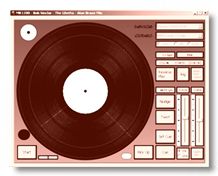
I have an extensive collection DJ mixes on my hard disk, and a while ago I discovered in one of them a catchy tune. It starts as a laidback (112 BPM) love song, a crooner voice singing “Just a little lovin’, early in the morning, just a little lovin’, early in the day …“. It then turns into a groovy re-edit of the same song, with the voice nicely cut up to match the new tempo (124 BPM). There are some added vocals that are a bit silly (clearly a non-native English speaker), but the chorus is really addictive. For some reason it stayed glued to the back of my head, I caught myself whistling it several times a day. But what was it?

Podcast for business: authenticated podcatching

Podcasting is still in its infancy. A lot of podcasts programs are about podcasters podcasting, on how they do it and why it’s so great. This is rather normal, since it is still new, and on the producing side a lot of (technical) issues still need to be addressed. I also hear the occasional “It’s 9AM. It’s raining. I haven’t got a clue what to say next.” podcast. But shows like IT Conversations, BBC’s “In Our Time” and The Dawn and Drew Show where the possibilities lie. This is high value content. It is clear that at some point people will start making money with podcasting.

How do you move a terabyte?

I recently discovered Brewster Kahle’s speech on the NotCon ‘04 podcast about the ambition of The Internet Archive to archive absolutely everything (all books, all movies, all music, …). (There is an excellent transcript on www.hotales.org .) They are currently setting up a second datacentre in Amsterdam, as an off-site copy of the original archive.org. They use massive parallel storage nodes grouped together in a PetaBox rack. You actually need 10 Petaboxes to get to 1 Petabyte (1 rack = 80 servers x 4 disks x 300 GB/disk = +- 100 TB). Since the rack uses node-to-node replication (every node has a sister node that holds a copy of all its data, so that if one of both nodes crashes, the data is still available), the net storage is 50TB.
So this got me thinking: how do you ‘copy’ the contents of PetaBox A to PetaBox B, how do you move 50TB?
Let’s try some numbers from my bandwidth calculator: